Food, Beverage & Brewing Process Water Systems — RO + UF for Consistent Product Water
RO → UF → product-water storage, engineered for bottled water, soft drinks, juice, dairy, and brewing — where flavour, microbial stability and recall-proof consistency matter more than conductivity. Capacities from 0.5 t/h countertop lines to 30 t/h plant-scale, with CIP and ozone/hot-water sanitisation as standard options.
Request a Process Water Sizing Sheet Talk to a food & beverage engineer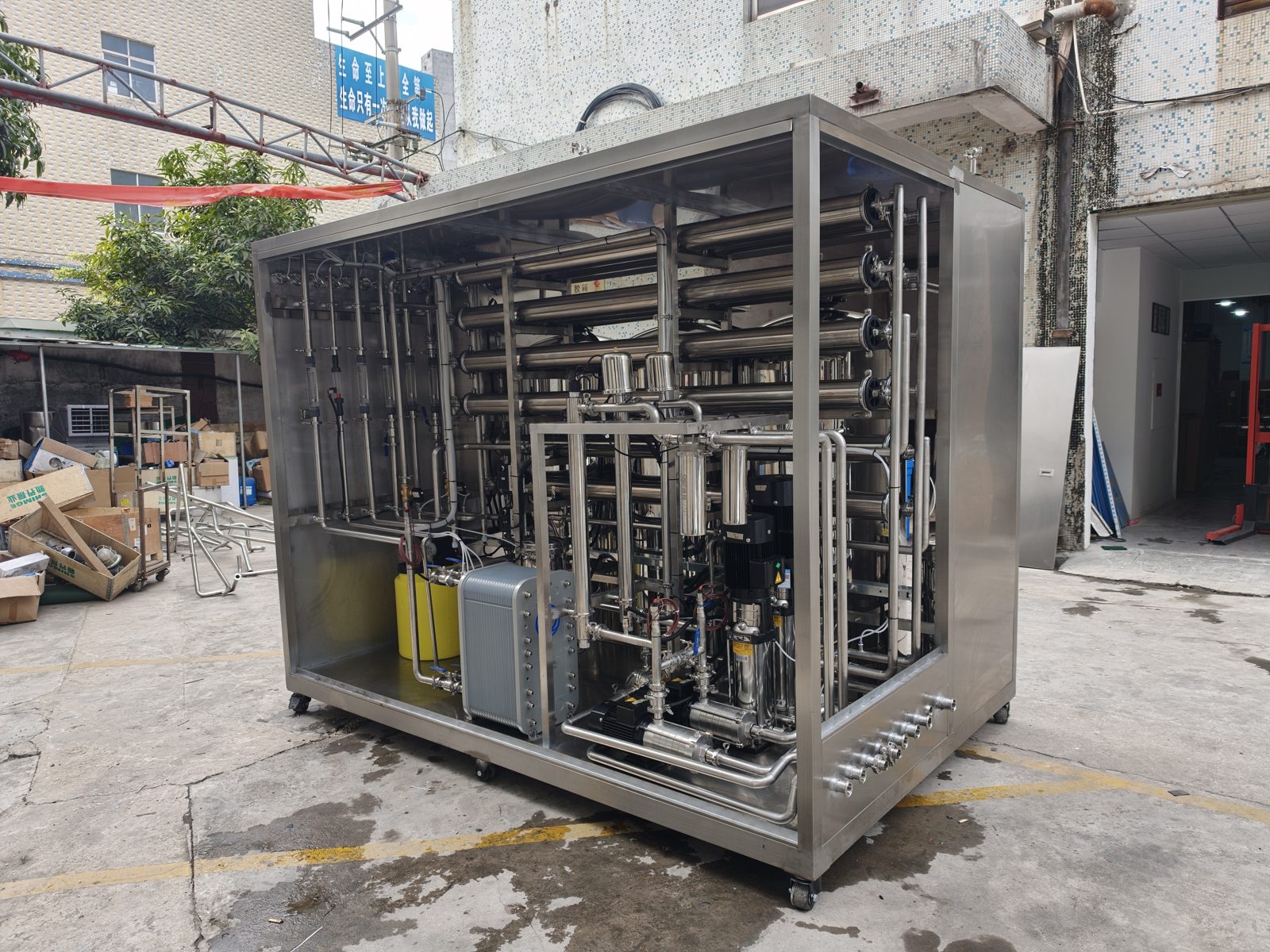
Why Food Plants Care About Water Consistency, Not Conductivity
In food and beverage, water is your largest single ingredient — and the one your QA team tests most often. The targets that matter are microbial stability, chlorine/chloramine removal, taste-chemistry consistency (TDS, hardness, silica), and doing it the same way every shift. That is a different engineering problem from ultrapure water: a bottled-water brand wants a stable 50–200 ppm profile from a source that drifts day to day, while a soft-drink line needs dechlorinated, softened water that does not change the syrup sweetness or leave scale in carbonators. We size the process train around your final-product spec and source-water variability, not an arbitrary conductivity number.
| What you control | Why it matters | Target we design to |
|---|---|---|
| Microbial count | Spoilage, off-flavour, product recall | < 1 CFU/mL (product water); sanitised distribution |
| Free chlorine | Off-taste, reaction with syrup/tea, membrane damage | < 0.02 ppm at point-of-use |
| Hardness (as CaCO₃) | Scale in carbonators, boiler, bottle washers | < 1 ppm (softened) where hard |
| TDS / alkalinity | Flavour profile, batch consistency | Blended to target range (e.g. 50–200 ppm) |
| Iron / manganese / silica | Discolouration, haze, bottle spotting | Fe < 0.05 ppm, Mn < 0.02 ppm |
Our Standard Food & Beverage Process Trains
Three standard variants cover the segment. We recommend based on your product category and final-water spec.
| Train | Best for | Stages | Final water |
|---|---|---|---|
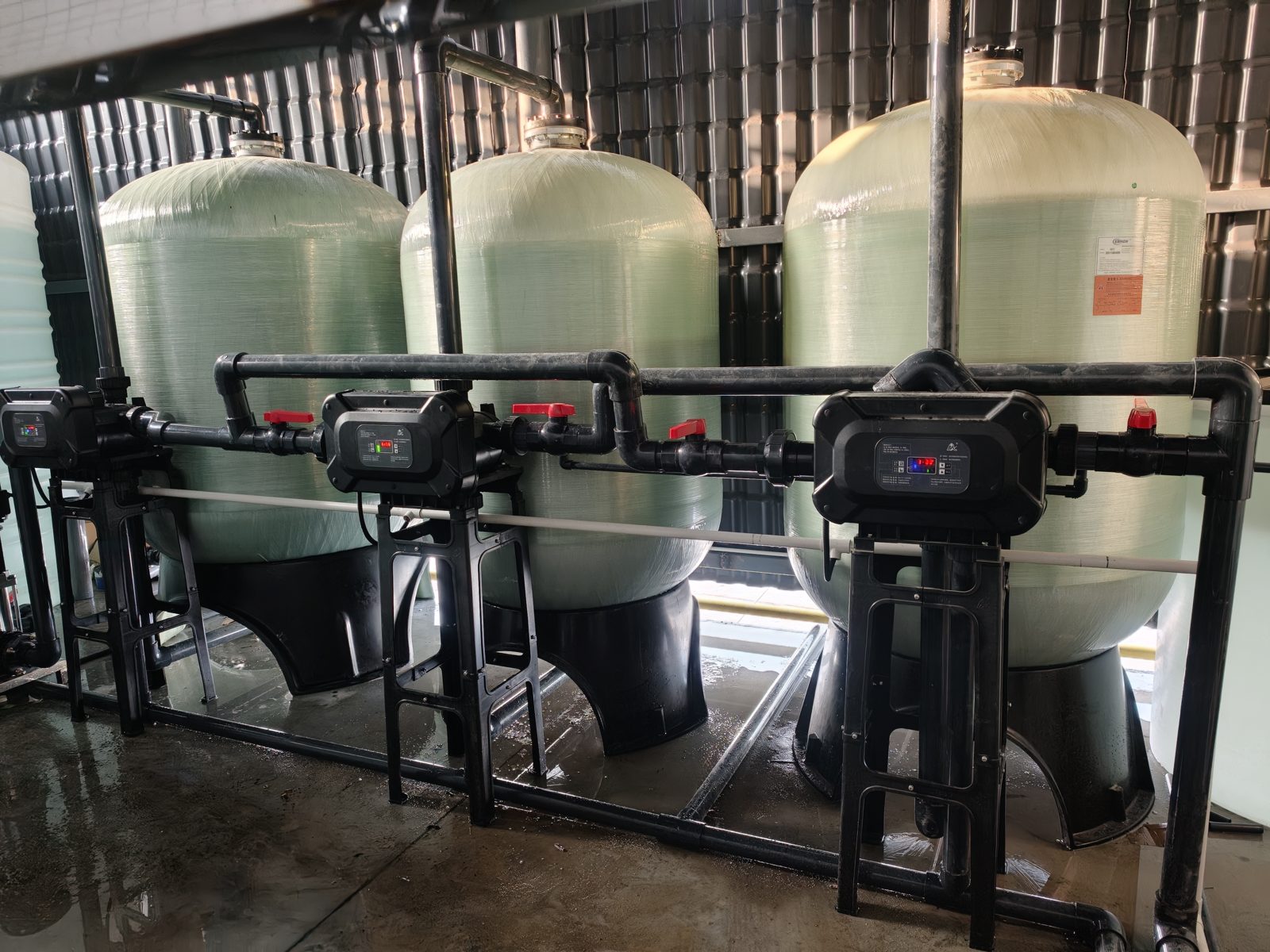
| F1 — Packaged drinking water | Bottled/pouched water | MMF → AC → 1-µm bag → RO → UV → product tank | TDS per brand spec, microbial < 1 CFU/mL |
| F2 — Soft drink / juice ingredient | Carbonates, concentrates, dairy | Softener → RO → UV → (optional UF) → ingredient tank | Soft, dechlorinated, stable TDS |
| F3 — Brewing liquor | Beer, malt, spirit mashing | MMF → AC → RO (blend) → H₂S removal where needed | Profile-matched brew liquor (Ca²⁺/alkalinity) |
A dedicated UF or 185-nm + ozone loop is added for aseptic/beverage product water where microbial limits are regulated and audited. CIP (caustic + peracetic acid) and ozone/hot-water sanitisation are engineered in, not bolted on.
Materials We Use (Every Wetted Part Touches Your Product)
| Wetted part | Material | Why |
|---|---|---|
| Product-water tanks | 304L / 316L SS or food-grade PP | Cleanable, no TDS leach, CIP-compatible |
| Piping (post-treatment) | 316L SS / food-grade PVC-C or PP | No off-gassing, smooth-bore for CIP |
| Gaskets / seals | EPDM / PTFE (FDA 21 CFR 177) | NSF/FDA food-contact compliant |
| Membranes | NSF 58 / 61 listed RO & UF | Compliant for potable/product contact |
| Filters | PP melt-blown, carbon block | Chlorine/particle removal before RO |
All post-treatment wetted parts are CIP- and sanitisation-compatible. Material certificates and FDA/NSF food-contact declarations ship with the system.
Standard Capacities (Food & Beverage)
| Model | Output | Power | Typical application |
|---|---|---|---|
| FB-0.5 | 0.5 t/h | 3 kW | Boutique bottler, restaurant/chain |
| FB-2 | 2 t/h | 10 kW | Regional water brand |
| FB-5 | 5 t/h | 22 kW | Soft-drink / juice plant |
| FB-10 | 10 t/h | 42 kW | Brewery / dairy line |
| FB-20 | 20 t/h | 80 kW | Large bottling plant |
| FB-30+ | Custom | Custom | Plant-scale / multi-line |
Skids are pre-piped, pre-wired and FAT-tested in our factory. Sanitisation, CIP skid and ozone generators are options sized per line.
Engineering Reference — 5 t/h Process Water for a Regional Bottled-Water Brand
| Parameter | Design value |
|---|---|
| Feed | Municipal potable, TDS ≈ 250 ppm (drifts 180–320), free Cl₂ ≈ 0.4 ppm |
| Product demand | 5 t/h, 1.5× peak for seasonal |
| Final water | TDS 60–90 ppm (blended), microbial < 1 CFU/mL, Cl₂ < 0.02 ppm |
| Train | MMF → dual AC → 1-µm → RO (70% recovery) → UV → product tank + ozone |
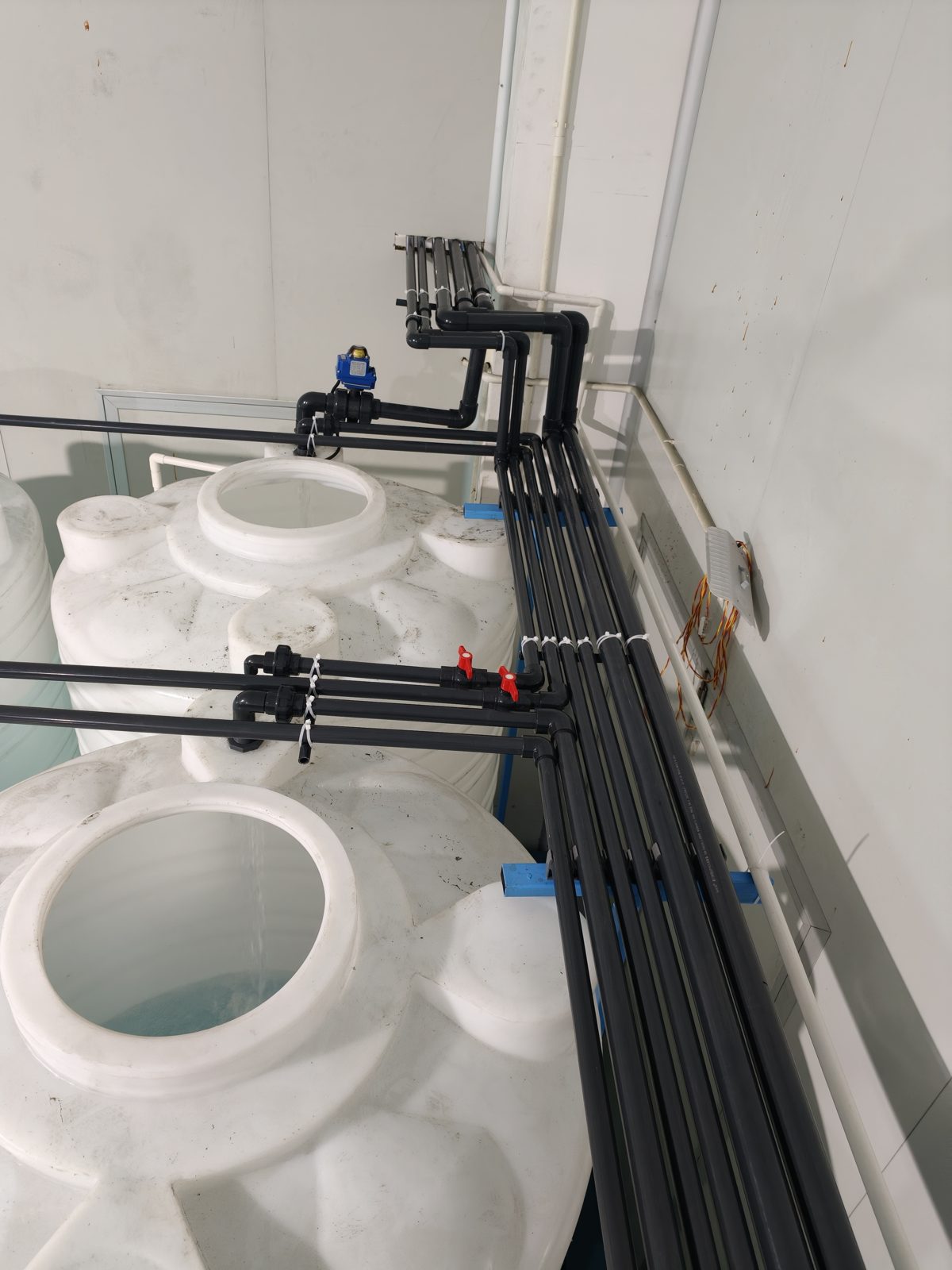
| Storage | 10 m³ food-grade SS with sanitary vent + UV/ozone loop |
| Sanitisation | Ozone (0.2–0.4 ppm residual) + periodic CIP via manual connection |
| Controls | Siemens S7-1200, recipe-based, batch log to QA / ERP |
| Delivery | 10–14 weeks from PO |
5 Pitfalls We Design Around
- Chlorine breakthrough on exhausted carbon — duplex carbon with timed/Δ-pressure change-out, online ORP before RO.
- Biofilm in warm product lines — sized for ≥ 1.0 m/s, ozone or hot-water sanitisation ≥ 80 °C, dead-leg-free.
- Seasonal TDS drift changing taste — RO blend valve + online TDS that re-sets product water to brand spec.
- Scale in carbonators / bottle washers — softening ahead of any heated surface; hardness target < 1 ppm.
- Recall on a microbial excursion you can't trace — batch logs and online microbial/ORP give a time-stamped record per batch.
Standards We Design To
- FDA 21 CFR 117 — Current Good Manufacturing Practice for food
- FDA 21 CFR 165 / 110 — Bottled water / food water standards
- NSF/ANSI 42, 58, 61, 62 — Drinking-water treatment units
- GFSI-recognised schemes (BRCGS, FSSC 22000) — supporting audits
- ISO 9001 / ISO 14001
Frequently Asked Questions
Q1. Do I need RO for bottled water, or is filtration enough?
Depends on source. If your municipal source is stable and low-TDS, carbon + UF + UV may be enough. If TDS drifts seasonally or you need a consistent branded profile, RO with a blend valve is the reliable way to hold it. We test your source and recommend honestly.
Q2. How do you keep the product water microbe-free between shifts?
Ozone or hot-water sanitisation (≥ 80 °C) of the product loop, dead-leg-free design, ≥ 1.0 m/s velocity, and sanitary vents. We size the sanitisation method to your line's length and running hours.
Q3. Can you match our branded TDS / taste profile?
Yes — RO with a clean-water blend valve plus online TDS control re-sets final water to your target range even as the source drifts. Your QA defines the range; we engineer the loop to hold it.
Q4. Is the system cleanable (CIP)?
Yes — post-treatment piping and tanks are smooth-bore, CIP-compatible, and we supply a manual or automated CIP connection sized for caustic + peracetic/peroxide cycles.
Q5. What about mineral addition for drinking water?
Optional remineralisation (limestone contactor or mineral dosing) restores taste minerals after RO where your brand or local regulation requires a minimum TDS.
Q6. Do your materials meet FDA / NSF food contact?
Yes — all post-treatment wetted parts use FDA 21 CFR 177 elastomers and NSF-listed membranes/filters. Food-contact declarations ship with the skid.
Q7. How long does delivery + installation take?
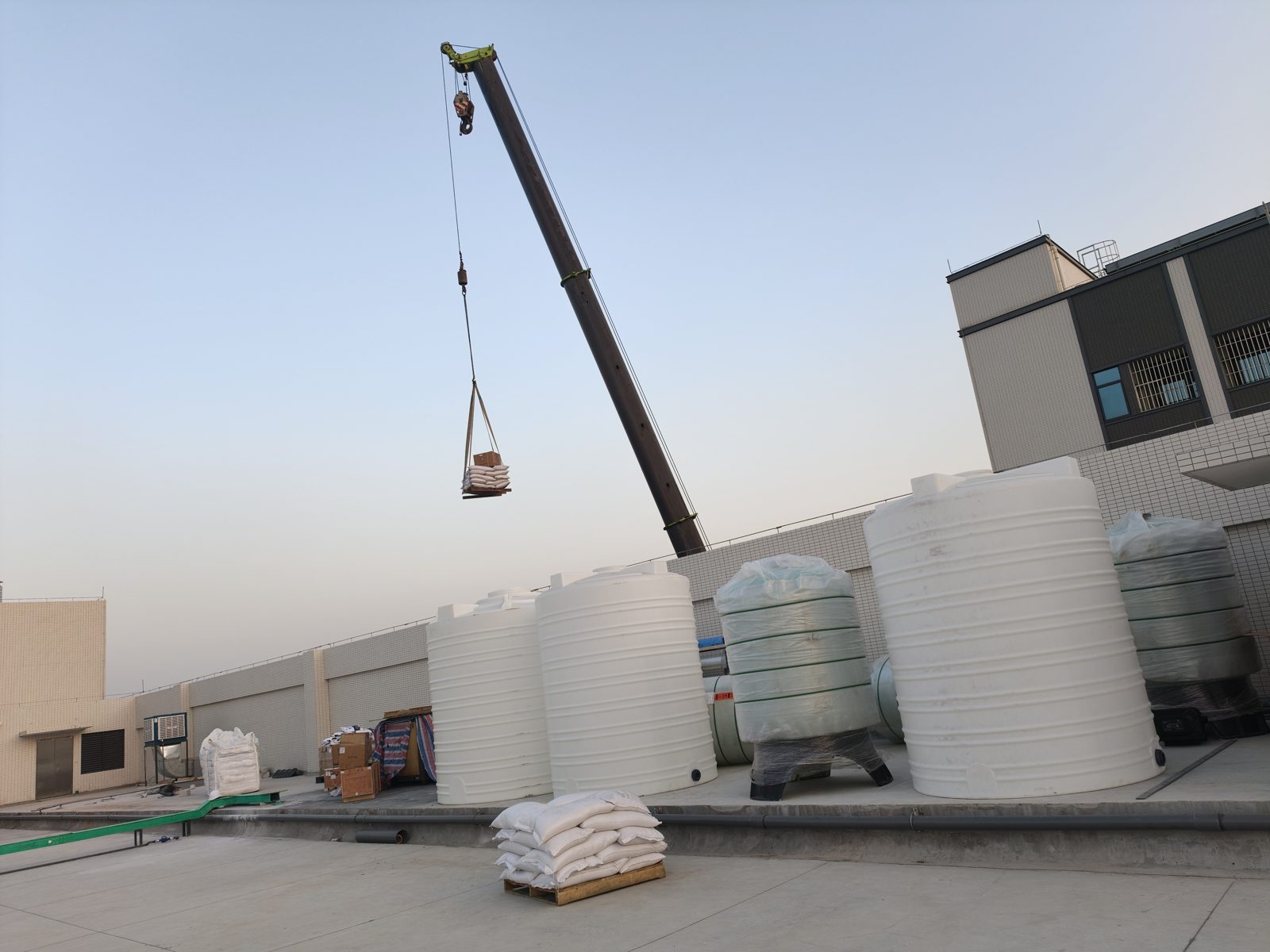
10–14 weeks for ≤ 20 t/h. On-site installation and commissioning 2–3 weeks, including operator training and a documented handover.
Q8. What is the warranty?
12 months on the complete system plus 36 months on critical parts (RO membranes, UV lamps, UF modules). On-site labour and travel included in the first 12 months.
Related Equipment & Industries
RO-4000 — Reverse Osmosis · UF-2000 — Ultrafiltration · DW-2000 — Drinking Water · WS-2000 — Water Softener
Semiconductor & Electronics (UPW) · Pharmaceutical & Biotech (GMP) · Seawater Desalination
Ready to Lock Down Your Process Water Spec?
Get a free sizing sheet + FDA 21 CFR 117 checklist within 24 h.
Request a Process Water Sizing Sheet Talk to a food & beverage engineerTechnical content reviewed by Ella Liu, Industrial Water Treatment Specialist at Rong Water — 10+ years sizing RO, UF and process-water systems for food, beverage and dairy clients.