Industrial Boiler Feedwater Systems — Softening + RO for Reliable Steam at 0.8–3.8 MPa
Softening → (RO) → deaerator feed, engineered for medium- and low-pressure industrial boilers that run factories, processes and steam-based utilities. The job here is different from utility power: keep hardness, oxygen and iron out so you avoid tube scale, priming and shutdowns — with simple, operator-friendly, low-maintenance plant. Capacities from 1 t/h to 50 t/h.
Request a Boiler Feedwater Sizing Sheet Talk to a boiler water engineer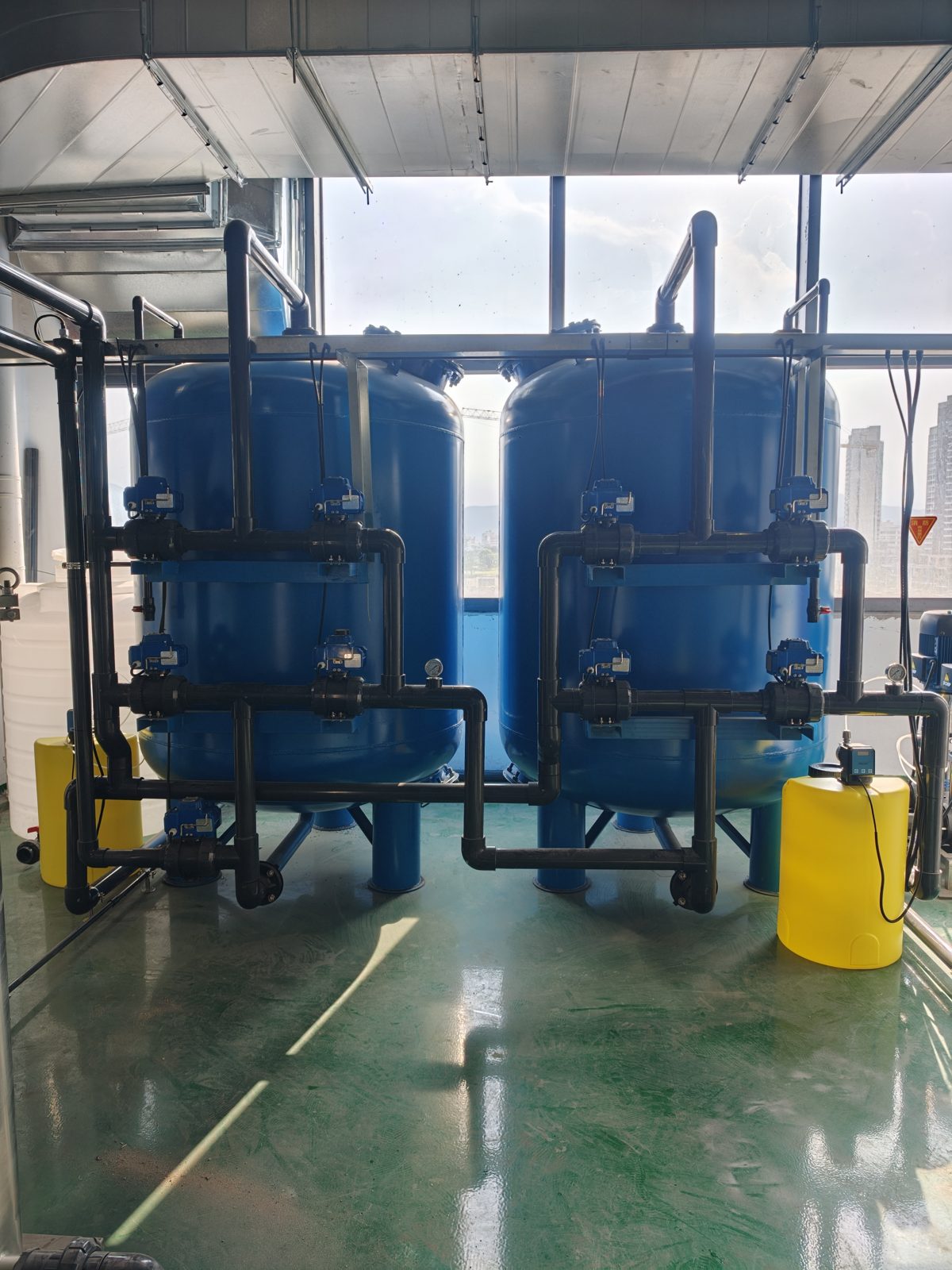
Industrial Boilers Are Ruined by Hardness and Oxygen, Not Silica
For a factory boiler at 0.8–3.8 MPa, the enemies are hardness scale on heat-transfer surfaces and oxygen pitting in feed lines and drums. Silica that would destroy a utility turbine is far less critical here. That means the right, cost-effective train is usually a softener (or RO on poor feed) + deaerator + chemical dosing — not an ultrapure make-up plant you would never need and would overpay to run. We design to GB/T 1576 and ASME BPVC, sized for your boiler pressure, steaming rate and how many hours a day it actually runs.
| What you control | Why it matters | Target we hold |
|---|---|---|
| Hardness (as CaCO₃) | Scale on tubes = overheating + failure | < 0.03 mmol/L (≈ 1.5 ppm) to boiler |
| Dissolved oxygen | Pitting of feed line + drum | < 15 ppb after deaerator |
| Iron (Fe) | Sludge + deposits | < 0.3 ppm feed, blowdown-controlled |
| pH (at operating) | Corrosion vs scale balance | 10.5–11.5 boiler water (phosphate/AVT) |
| Conductivity / TDS | Foaming, priming, carryover | Managed by blowdown per GB/T 1576 table |
Our Standard Industrial Boiler Feedwater Trains
Two standard variants — most plants need the simple one. We recommend based on feed source and boiler pressure.
| Train | Best for | Stages | Final water |
|---|---|---|---|
| B1 — Softener + deaerator | Clean city feed, ≤ 2.5 MPa | Softener → (polish filter) → DA tank | Hardness < 0.03 mmol/L, O₂ < 15 ppb |
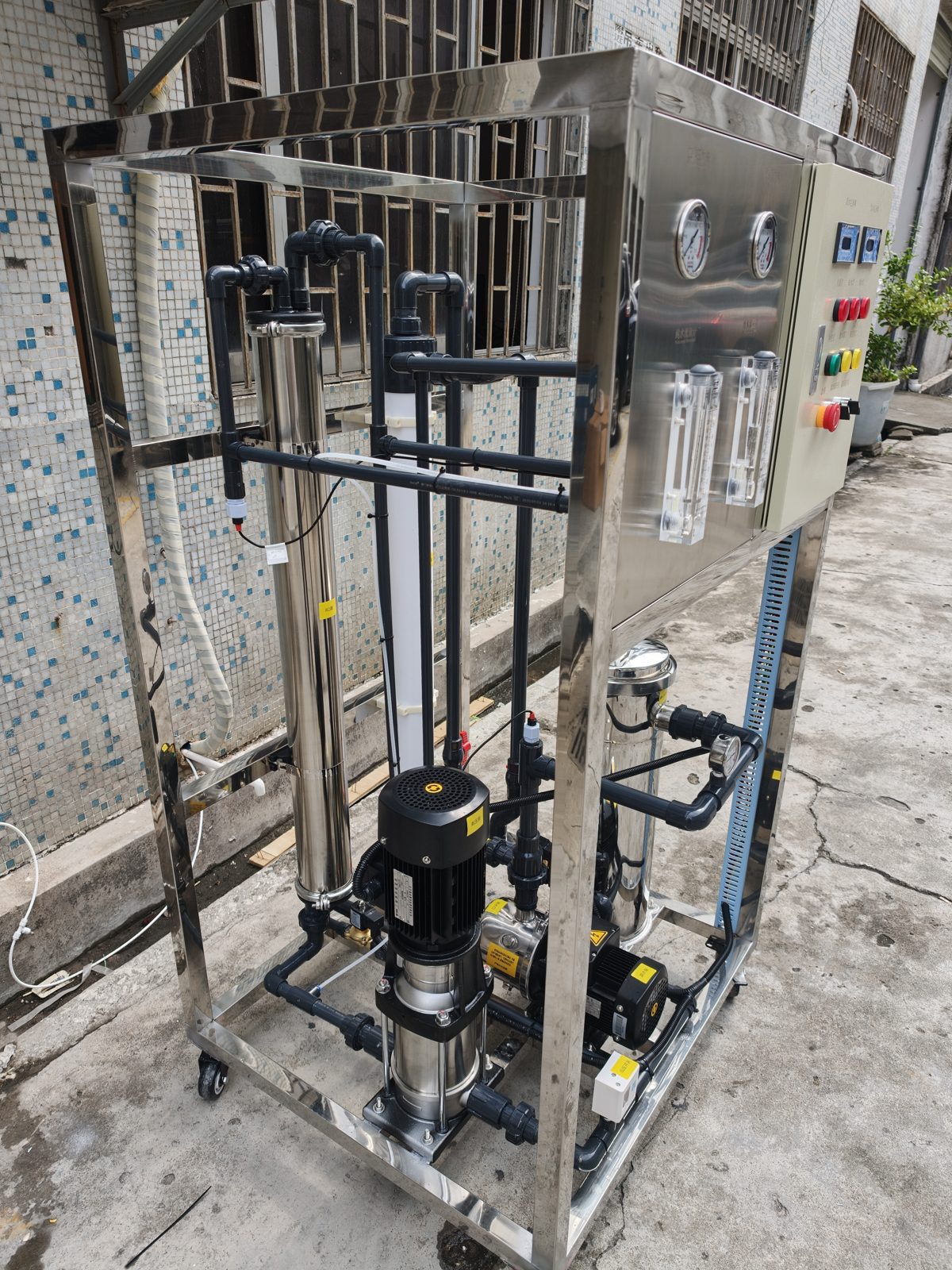
| B2 — RO + softener + DA | Hard/high-TDS feed, higher pressure | Softener → RO → DA tank | Low TDS + hardness, less blowdown loss |
Blowdown heat recovery and automatic blowdown control are options that cut fuel and water losses — often the fastest payback item on an older plant.
Materials We Use
| Component | Material | Why |
|---|---|---|
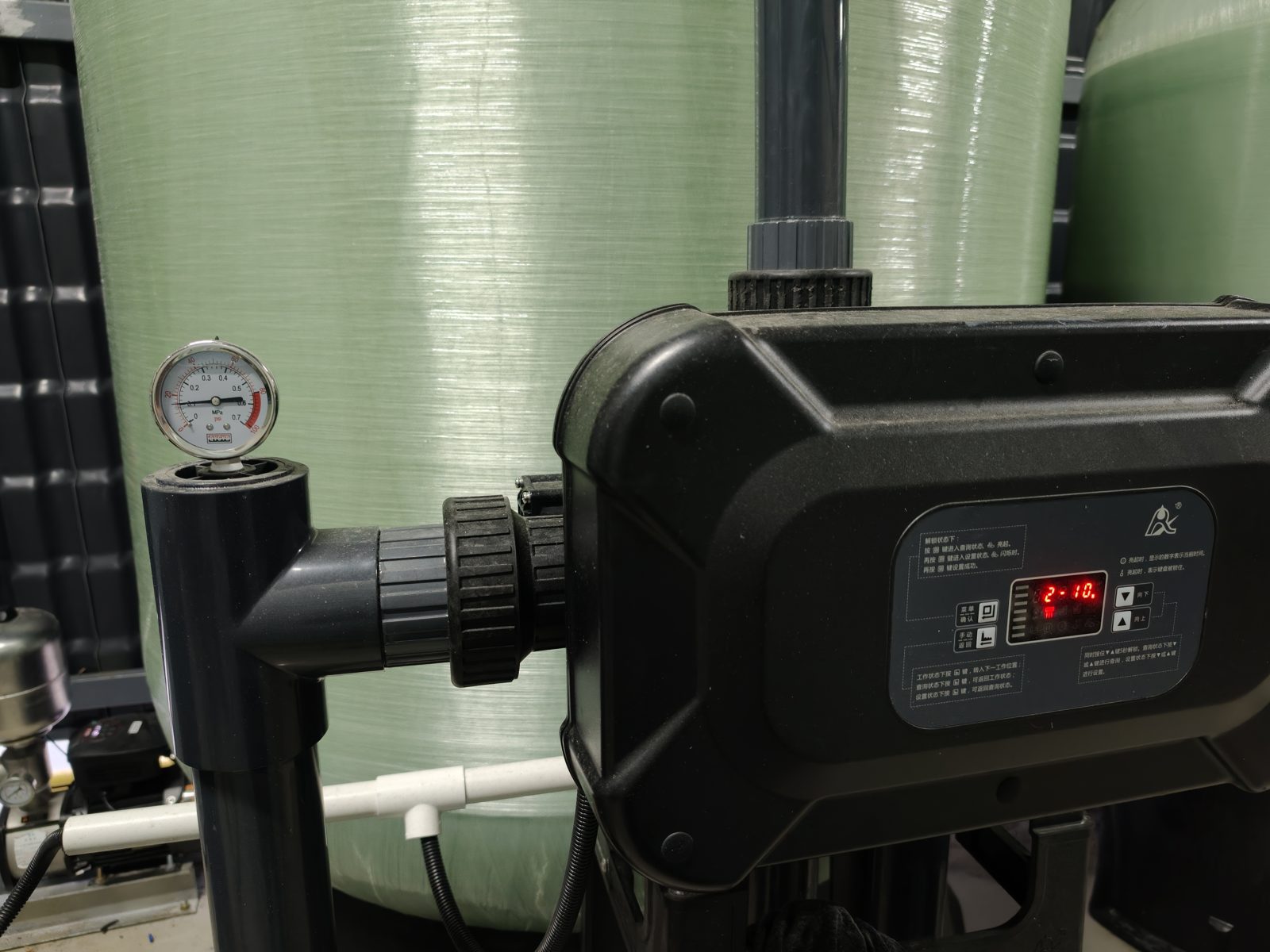
| Softener vessels | FRP (fibreglass) / lined CS | Non-corrosive, low-cost, rated to boiler feed pressure |
| Resin | Strong-acid cation (SAC) | Hardness removal to negligible levels |
| RO (where used) | FRP vessels + TFC membrane | TDS reduction, less blowdown |
| Piping (post-treat) | Galvanised / SS on hot side | Matches pressure & avoids O₂ corrosion |
Standard Capacities (Boiler Feedwater)
| Model | Output | Power | Typical boiler |
|---|---|---|---|
| BF-1 | 1 t/h | 2 kW | 1–2 t/h fire-tube |
| BF-2 | 2 t/h | 4 kW | 2–4 t/h steam |
| BF-5 | 5 t/h | 9 kW | 4–10 t/h package boiler |
| BF-10 | 10 t/h | 18 kW | 10–20 t/h plant boiler |
| BF-20 | 20 t/h | 34 kW | 20–35 t/h central boiler |
| BF-50 | 50 t/h | 80 kW | Large industrial / multi-boiler |
Systems are sized to your steaming rate plus blowdown/start-up margin. Fully automatic softener regeneration and DA level control included.
Engineering Reference — 5 t/h Feedwater for a 10 t/h Industrial Fire-Tube Boiler
| Parameter | Design value |
|---|---|
| Feed | Municipal, TDS ≈ 250 ppm, hardness ≈ 180 ppm as CaCO₃ |
| Steaming rate | 10 t/h; feed demand ≈ 11 t/h incl. blowdown |
| Final feed | Hardness < 0.03 mmol/L, O₂ < 15 ppb after DA |
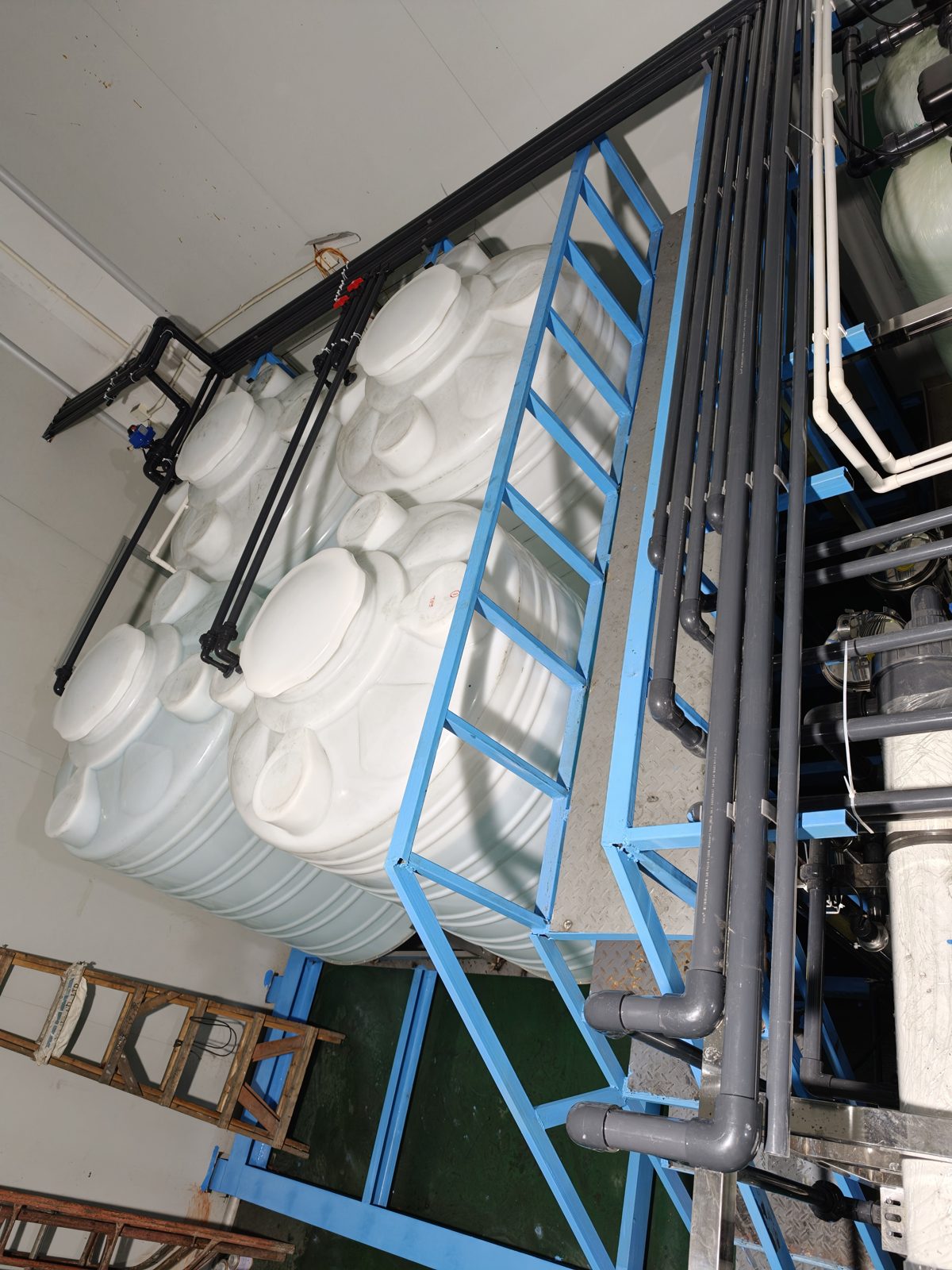
| Train | Twin softener (alternating) → DA tank (0.2 MPa) → dosing (phosphate/sulphite) |
| Blowdown | Automatic conductivity blowdown with heat recovery |
| Controls | Level + conductivity + softener regeneration auto |
| Delivery | 6–10 weeks from PO |
5 Pitfalls We Design Around
- Hardness breakthrough on an unmonitored softener — hardness test points + timed regen; we fit a hardness alarm where feed is borderline.
- Cold-water O₂ corrosion before the DA — correct DA sizing + oxygen scavenger dosing point at the right temperature.
- Undersized blowdown — we size blowdown to GB/T 1576 conductivity limits so you don't build up sludge.
- Iron fouling from old condensate return — filter/cyclone on return lines; segregated condensate where contaminated.
- No operator training on chemical dosing — simple dosing skids + on-site training and a one-page O&M sheet per boiler.
Standards We Design To
- GB/T 1576 — Quality of industrial boiler water
- ASME BPVC Section I / II — Boiler & pressure-vessel design
- GB/T 12145 — (utility-scale, see our Power Plant page)
- TSG G0001 — China boiler safety (as applicable)
- ISO 9001 / ISO 14001 / ISO 45001
Frequently Asked Questions
Q1. Is a softener enough, or do I need RO?
For clean city feed and boilers up to about 2.5 MPa, a softener + deaerator is usually enough and cheapest to run. If your feed is hard or high-TDS, RO cuts blowdown and fuel loss enough to pay back. We test your water and recommend one honestly.
Q2. Why is oxygen so bad for my boiler?
Dissolved oxygen pits the feed line, drum and tubes — often silently, until a leak. A correctly sized deaerator plus oxygen-scavenger dosing holds O₂ under 15 ppb and protects the asset for decades.
Q3. How much does blowdown really cost me?
Typically 2–5% of fuel. Automatic conductivity blowdown with heat recovery cuts both water and fuel loss — often the fastest payback on an older plant.
Q4. Do you handle condensate return?
Yes — we filter/clean condensate where feasible and segregate contaminated return so it doesn't drag iron and hardness back into your feed.
Q5. How automated is the system?
Softener regeneration, DA level and blowdown are automatic. Chemical dosing is a simple skid with a one-page O&M sheet your operators can follow without special training.
Q6. Can you fit this to my existing boiler room?
Yes — we do retrofit installations in existing plant rooms, working around your layout and any steam shutdown windows.
Q7. What is the warranty?
12 months on the complete system plus 36 months on critical parts (softener valves, RO membranes if fitted). On-site labour and travel included in the first 12 months.
Q8. What if I later move to a utility-scale boiler?
For high-pressure and supercritical utility boilers (≥ 9.8 MPa) see our Power Plant Make-Up Water page — different spec and sizing.
Related Equipment & Industries
WS-2000 — Water Softener · RO-4000 — Reverse Osmosis · UF-2000 — Ultrafiltration
Power Plant (Utility Make-Up) · Food & Beverage · Pharmaceutical & Biotech
Ready to Make Your Boiler Last?
Get a free feedwater sizing sheet + GB/T 1576 checklist within 24 h.
Request a Boiler Feedwater Sizing Sheet Talk to a boiler water engineerTechnical content reviewed by Ella Liu, Industrial Water Treatment Specialist at Rong Water — 10+ years sizing softening, RO and deaerator systems for industrial boiler clients.